Invitations and Scholarships to Set Global Agendas in Public Health, Equity and Security
Janine has had a global influence in the field of setting agendas for equitable, safe and fair societies. Very early in her career, she won multiple scholarships and received prestigious invitations – an exceptional achievement for someone yet to gain an established record in academia. Janine’s career and professional experience have been based on many years of observations, understanding and learning from around the world, to ensure we reach as many people as possible with care, and address inequality.
For instance, Janine was awarded a prestigious scholarship to attend and contribute to the Global Health Post-2015 Development Agenda in Stockholm, Sweden. The Agenda emerged as a comprehensive and integrated response to the limitations and lessons of the Millennium Development Goals (MDGs), and recognised the need for a broader, interconnected framework to address global challenges.
Janine was also involved in bringing together people from underserved communities, to attend consultations on the policing of vulnerable populations in Europe. This was organised by the Law Enforcement and Public Health Network (now the Global Law Enforcement and Public Health Association), the Law Enforcement and HIV Network, and the United Nations Office for Drugs and Crime (UNODC). A number of consultations took place, which set out agreements on how to focus on needs-based work in policing. This removed a criminalisation agenda, in order to support populations who are intentionally displaced by policy and legislation, and are thus on the margins.
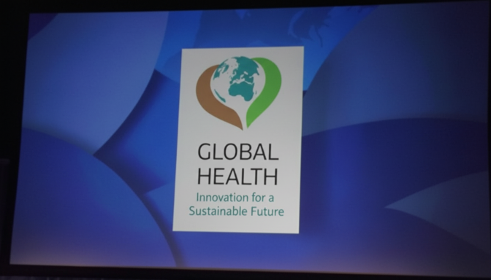
Janine contributed to the panel discussions and consultation processes, alongside global specialists from The Lancet and the World Health Organization (WHO).
Janine knows first-hand what it’s like to be inadequately policed, and to experience trauma from poor safeguarding. Also, Janine’s major strength has been to do sensitive and trust-building work with people who have been criminalised – often those who have experienced exploitation and violence.
These gatherings also encouraged reflective practice on examples of collaborative and partnership work that succeeded in improving situations, rather than exacerbating problems. This particularly involved honesty from the police about what they can and cannot do; making sure that health/needs-based work is prioritised; and how the police can use their position better in leading through building trust and relationships, to create a community of knowledge united in tackling serious crime, harm and vulnerability.
Additionally, participants in the consultation had the opportunity to amend terminology to reflect an inclusive, trauma-aware, deficit removal and less medicalised use of of language when setting new agendas.
“Using appropriate language in health agendas and communication is not just about ‘being polite’ – it is a critical tool for ensuring safety, building trust, and improving medical outcomes for populations. When language is stigmatising or exclusionary, it creates invisible barriers that prevent people from seeking or receiving the care they need.”
- Janine Ewen

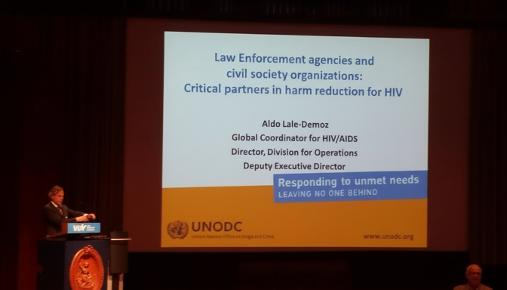
The consultations on policing vulnerable populations in Europe have pushed for better care in addressing unmet needs resulting from heavy policing agendas.
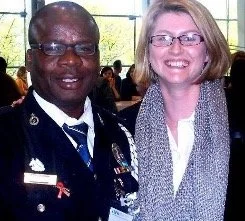
Janine Ewen (right) at the Law Enforcement and Public Health Association 2016
Another of Janine’s strengths is her critical approach to policy. In her analysis of the Post-2015 Agenda (which became the Sustainable Development Goals or SDGs), she argued that security and justice are fundamental prerequisites for all other development goals. She emphasised that without a safe environment and a fair legal system, progress in areas like health and education is unsustainable. Janine’s central critique was that these commitments were not being guaranteed. She warned that government resistance and the difficulty of measuring ‘security’ and ‘justice’ through data could lead to these goals being sidelined in favour of more easily quantified targets.
For Janine, ‘justice’ is not just about catching perpetrators; it requires creating systems that prevent re-traumatisation and address the root causes of vulnerability – such as poverty and domestic instability – rather than just criminalising its symptoms.